
A cracked or gouged alloy wheel is one of the most common bits of damage a car suffers — a pothole, a kerb, a collision. But at claim time the alloy is treated with more suspicion than almost any other part, because insurers know the difference between a wheel damaged in a genuine accident and one worn down by months of kerbing. Whether your alloy is repaired, replaced, depreciated or refused comes down to how the damage happened and what the surveyor sees. This guide explains how an alloy-wheel claim is actually assessed in India — and when it’s even worth making.
Is alloy damage covered?
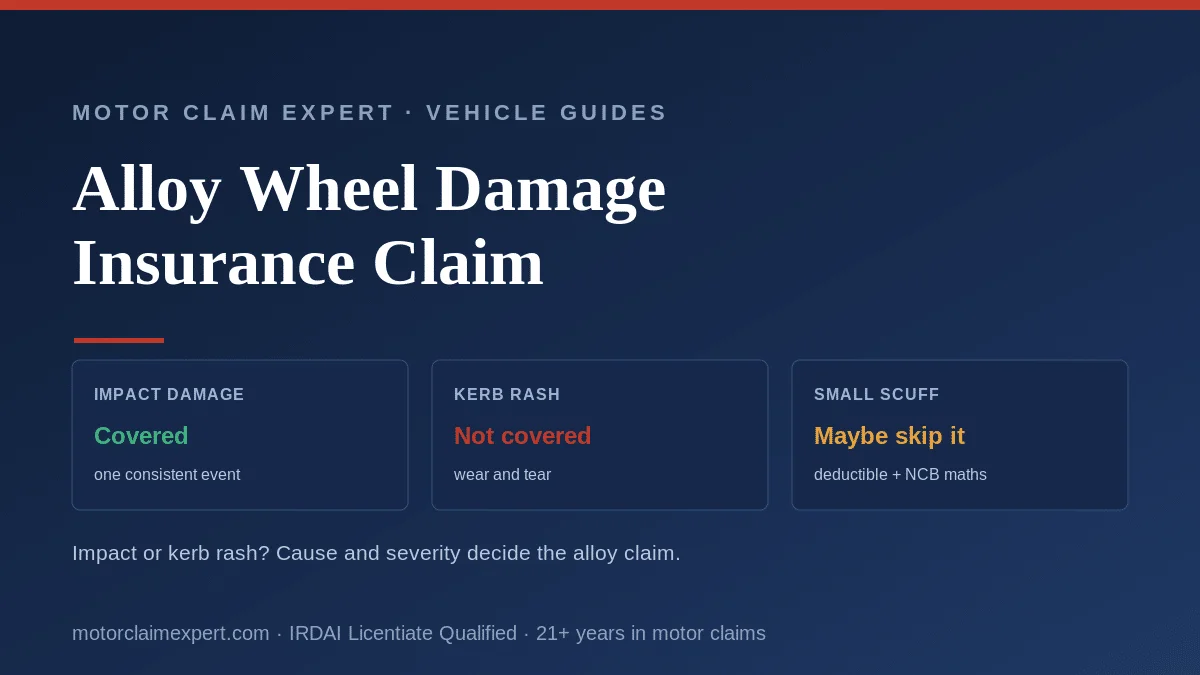
Yes, when it is accidental external damage and you hold a comprehensive or standalone own-damage policy — a wheel cracked in a pothole strike or a collision is exactly what own-damage cover is for. Where it gets contested is cause: an alloy is also the part most likely to show gradual damage — kerb rash, scuffing from tight parking, corrosion — and that ordinary wear and tear is not covered. So the alloy claim lives or dies on whether the damage reads as a sudden event or as accumulated use.
Insider note — impact vs kerb rash, through the surveyor’s eyes: a genuine impact usually shows a consistent story — a fresh gouge or crack on the wheel that matches other damage on that corner (tyre sidewall, suspension, bumper), from one event. Kerb rash shows as repeated shallow scuffing around the rim lip, often on more than one wheel, with no matching impact elsewhere — the signature of routine parking, not an accident. Surveyors also distinguish a cosmetic scuff (refurbish/repair) from structural damage — a crack, a bent rim, air loss — which needs replacement for safety. Claim the corner that took a real hit; don’t try to pass months of kerb rash off as one accident, because the pattern gives it away.
Repair or replace — and what you’ll actually get
| Damage | Usual treatment | At claim time |
|---|---|---|
| Cosmetic scuff / light kerb mark | Refurbish/repair | Often below the deductible; usually not worth claiming |
| Crack, bent rim, air loss | Replacement (safety) | Claimable if from a covered impact; depreciation applies |
| Alloy damaged with other accident damage | Replace/repair as part of the repair | Strong claim — consistent single-event damage |
When an alloy is replaced, it’s a metal/alloy part and attracts depreciation on the standard grid unless you hold a zero-depreciation add-on, and the compulsory deductible still comes off. So even a valid replacement rarely returns the full sticker price of a new wheel — worth knowing before you assume the claim makes you whole.
Should you even claim it?
Run the small-damage test first. A single scuffed alloy refurbished for a modest sum is often cheaper to pay yourself than to claim — once you subtract the compulsory deductible and account for the No-Claim Bonus you’d reset, a small claim can cost you more than the repair. Claim when the alloy is cracked or bent (a safety replacement), when it’s part of a larger accident repair you’re already claiming, or when the replacement clearly exceeds the deductible plus your bonus value. This is the same logic as any minor-damage decision — see our car damage claims guide.
A worked example
An alloy claim is really a question of cause and severity: genuine impact damage is covered and worth claiming when it’s structural or part of a bigger repair; kerb rash and cosmetic scuffs are wear you’ll usually fund yourself. Know which you have before you file, expect depreciation and the deductible on a replacement, and protect your bonus on the small stuff. For related decisions see pothole damage claims and windshield glass claims, all under the car damage claims guide.
Frequently Asked Questions — Alloy Wheel Damage Claims
Is alloy wheel damage covered by car insurance?
Yes, when it is genuine accidental external damage and you hold a comprehensive or standalone own-damage policy — for example an alloy cracked in a pothole strike or a collision. Gradual kerb rash and corrosion are wear and tear and are not covered.
How does the surveyor tell impact damage from kerb rash?
Impact damage shows a consistent single-event pattern — a fresh gouge or crack on one corner that matches other damage there. Kerb rash shows repeated shallow scuffing around the rim, often on several wheels, with no matching impact, which reads as wear.
Will a damaged alloy be repaired or replaced?
A cosmetic scuff is usually refurbished. A crack, bent rim or air loss needs replacement for safety. A replacement from a covered impact is claimable, but depreciation applies to the new alloy unless you hold zero-depreciation cover.
Is it worth claiming for a scratched alloy?
Often not. Once you subtract the compulsory deductible and account for the No-Claim Bonus you would lose, a small refurbishment can cost less paid yourself. Claim when the alloy is cracked or bent, or when it is part of a larger accident repair.
Does depreciation apply to a replaced alloy?
Yes. An alloy is a metal part and attracts depreciation on the standard age-based grid unless you hold a zero-depreciation add-on, and the compulsory deductible also applies, so a replacement rarely returns the full price of a new wheel.
Can I claim kerb rash on my alloys?
Generally no. Kerb rash is gradual wear from parking and normal use, which own-damage cover excludes. Trying to present accumulated kerb scuffing as a single accident usually fails because the wear pattern is visible to the surveyor.
My alloy cracked in a pothole — can I claim?
Yes, a pothole impact that cracks or bends the alloy is accidental damage covered under own-damage, especially where it is consistent with other damage to that wheel or corner. Expect depreciation on the replacement and the deductible.
Sources & references
- Indian comprehensive / standalone own-damage motor policy — accidental external damage covered; wear and tear excluded.
- Standard motor depreciation schedule (metal parts, age-based) and the compulsory deductible.
- Zero-depreciation add-on treatment; No-Claim Bonus impact of a claim at renewal.


